
If you’re in Bali, you’ve likely experienced it: the torrential downpours that define the rainy season, turning streets into rivers in Canggu and bringing persistent, heavy showers to Ubud. It’s easy to assume that if the season has arrived, the entire island, including its majestic volcanoes, must be perpetually wet.
But Mount Batur plays by its own rules. One of the most unique and magical aspects of trekking Mount Batur for sunrise isn’t just the view—it’s the fascinating meteorological gamble you take during the rainy season.
Bali is a relatively small island, but its topography is incredibly diverse. The southern regions, with their beaches and low-lying areas, bear the full brunt of the monsoon rains. The central highlands, however, where Mount Batur proudly stands at 1,717 meters, create their own unique microclimate.
Mount Batur is an active volcano, and its massive presence disrupts cloud formations and wind patterns. Very often, the thick, moisture-laden rain clouds that soak the southern resorts get “stuck” on the slopes or are diverted around the mountain. They release their rain on the lower elevations, leaving the summit region of Kintamani clearer than you’d expect.
So, while you might be driving from your hotel through a relentless rainy season downpour, there’s a very good chance you’ll arrive at the base of Batur to a sky peppered with stars. It’s a lesson in not letting the “rainy season” label cancel your adventure.
This unpredictable weather creates two breathtakingly unique experiences for your hike. Neither is a “bad” option—they are simply different kinds of magic.
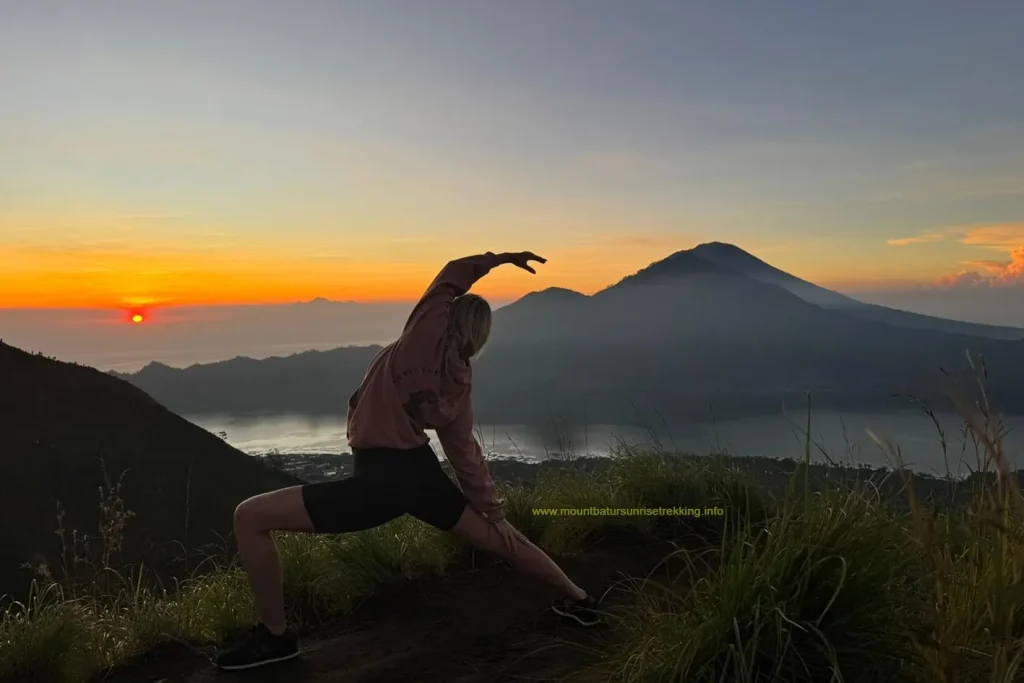
This is the classic dream, especially precious during the rainy season. You hike under a clear, starry sky. As the sun rises, you witness an unobstructed panorama of Mount Agung, Lake Batur, and the island. From this vantage point, you can often see the vast blanket of rain clouds hovering *over South Bali and the ocean*, a distant storm that you are blissfully elevated above. It’s a powerful feeling of having transcended the season.
Sometimes, the mountain does have its own clouds, but in the most magical way. You might hike through a misty, ethereal layer, only to break through the top and find yourself standing **above a rolling, white sea of clouds**. The sunrise paints this cloudscape in hues of pink and orange, creating a panorama that feels otherworldly. In this scenario, you are literally standing on an island in the sky, a secret world above the rainy season.
Embracing the uncertainty is part of the adventure, but being prepared is non-negotiable. Here’s how to hike smart during Bali’s wet months.
Your backpack is your best friend. Essentials include: a high-quality rain jacket or poncho, a headlamp with fresh batteries, trekking shoes with excellent grip (trails become slippery), and layers (temperatures can vary). Don’t forget a waterproof cover for your backpack and camera.
Seasoned local guides have an innate understanding of Batur’s moods. They can read the sky, wind, and trails in a way no weather app can. Their experience is invaluable for safety and for finding the best spots for that perfect sunrise view, regardless of the clouds.
Go with the flow. The adventure is in the journey itself—the pre-dawn climb, the changing weather, the camaraderie. Whether you get a crystal-clear sunrise or a mystical sea of clouds, the experience of climbing an active volcano during the rainy season is uniquely atmospheric and unforgettable.
So, the next time you’re in Bali watching the rainy season pour down and questioning your Mount Batur sunrise trekking, remember the mountain’s secret. You are venturing into a different world, with its own rules. Don’t let the season dampen your spirit—the sky above Batur might just be waiting to give you the most dramatic and rewarding show of all. Sometimes, the greatest views come after weathering a little uncertainty.